

- About
- Programs
- Campus Life
- Career Services
- Admissions
- News & Events
- Alumni
- Anton Mosimann


The Future of Wine: A Changing Map, a New Role for Hospitality
Discover how climate change is reshaping wine production, emerging wine regions and grape varieties, and what this means for hospitality.
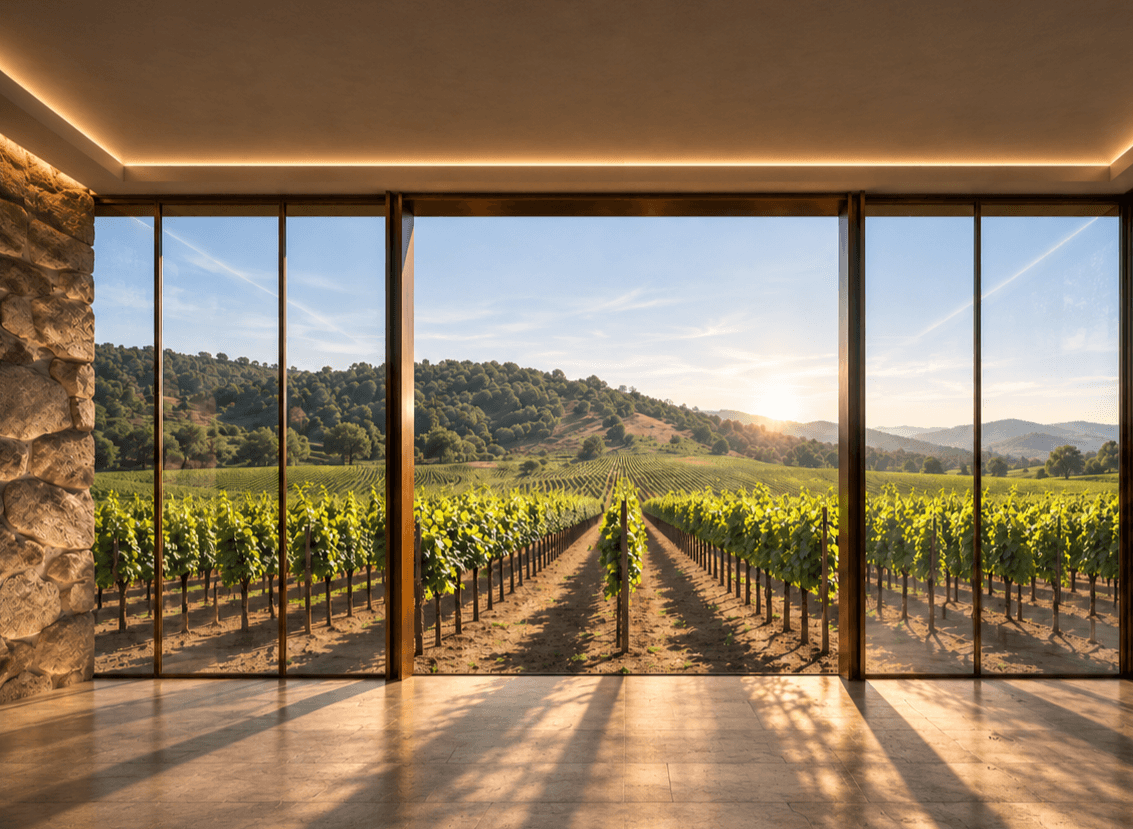
Climate change is redrawing the map of where grapes can grow and how wines taste. For hospitality, adapting means rethinking what to buy, what to serve, and how to introduce guests to unfamiliar regions.
Wine has always offered a culinary voyage, carrying guests to places they may never have visited. That role will remain. The destinations may change.
A guest beginning to explore wine might ask for a French red. Someone with a little more knowledge might choose a Bordeaux. A seasoned enthusiast might look for a Pauillac from a favorite château. Each choice draws on a familiar map of wine, drawn by reputation, experience, and tradition.
But what happens when the sommelier suggests an English sparkling wine or a Danish white? As climate change reshapes where grapes can thrive, hospitality has an opportunity to introduce guests to destinations they never expected to find in their glass.
This kind of encounter will become increasingly common. Wine’s geography is evolving, creating difficult decisions for producers and new questions for the businesses that serve their wines.
A recent wine masterclass at Culinary Arts Academy Switzerland, featuring grape geneticist Dr. José Vouillamoz, offered an opportunity to consider that future. The discussion raises a question extending well beyond the vineyard: how can hospitality help guests understand and explore a changing world of wine?
How Climate Change Is Changing the Wine Industry
Wine has always reflected its growing conditions. Temperature, rainfall, soil, and seasonal timing influence what a vineyard can produce. When those conditions change, the consequences reach the glass.
A 2024 review published in Nature Reviews Earth & Environment examines how warming, drought, and other climatic changes are affecting wine production worldwide. Earlier ripening can change the balance between sugar, acidity, and aroma, influencing alcohol levels and the character of the finished wine.
The implications for familiar regions are substantial. As Dr. José Vouillamoz describes in his new book, Grape Varieties: Their Future, temperatures in Napa Valley, California, reached 45°C (113°F) in September 2022, just before harvest. The extreme heat severely disrupted grape development, affecting the flavor balance and alcohol content of the finished wines. Such pressures are accelerating the search for cooler growing locations, closer to the Pacific coast or at higher elevations.
According to INRAE’s summary of the research, if global warming exceeds 2°C, around 90% of traditional winegrowing areas in the coastal and lowland regions of Spain, Italy, Greece, and southern California could lose their suitability for producing high-quality wine at economically sustainable yields by the end of the century. This is a conditional projection, rather than a prediction that these wine industries will inevitably disappear.
For hospitality, the issue reaches beyond whether a particular bottle remains available. If a wine’s style evolves, the assumptions behind a pairing or recommendation may need to evolve with it. A familiar name on a wine list cannot replace tasting, understanding, and explaining the wine itself.
Where the Next Wine Regions May Emerge
Warmer conditions are creating possibilities in places previously considered marginal for commercial wine production. Research summarised by INRAE identifies potential for developing wine regions in Denmark, Belgium, and the Netherlands, alongside improved growing suitability in parts of existing cooler regions. These opportunities depend on local conditions: warmer temperatures can help grapes ripen, but frost, rainfall, disease, and extreme weather still present challenges.
Britain offers a tangible example of an expanding sector. WineGB’s published figures record 1,158 vineyards and approximately 4,841 hectares under vine in 2025. Its growing industry shows what can happen when changing growing conditions meet investment and expertise. For hospitality professionals, English and Welsh wines offer an increasingly substantial category to explore, rather than an occasional novelty on the wine list.
Further north, southern Sweden is developing its own wine identity. In Skåne, producers work with grapes including Solaris, alongside varieties such as Pinot Noir and Chardonnay. Several combine vineyards with restaurants, tastings, and accommodation, showing how wine production can create new reasons to visit a region.
However, climatic suitability is only one part of building a wine region. Investment, expertise, infrastructure, distribution, and consumer confidence all matter. A vineyard can produce an excellent wine and still struggle to persuade buyers to consider an unfamiliar origin.
Hospitality can help bridge that gap. Restaurants and hotels provide a setting where guests can encounter a wine through a trusted recommendation, a thoughtful pairing, or a conversation with someone who understands it.
The Future May Also Lie in Forgotten Grapes
Moving production is only one response to climate change. Another is to reconsider the grapes already available.
This is where Vouillamoz’s work brings a particularly valuable perspective. In a recent recorded conversation with wine writer Caroline Henry, he explored both retaining existing varieties and introducing alternatives. The discussion covered disease-resistant hybrids, rootstocks, and the potential of neglected grapes, including varieties able to retain acidity in warmer conditions.
His argument opens up a different way of thinking about innovation. Some answers may come from new breeding techniques; others may come from understanding and conserving existing diversity.
In his article “How AI is advancing ampelography”, Vouillamoz describes how technology could help researchers identify useful traits in rare and ancestral grape varieties and support breeding for climate resilience. He also stresses the limitations of current identification tools, particularly when they encounter unfamiliar vines.
For hospitality, this suggests that discovery should extend beyond unfamiliar countries. A little-known grape from a longstanding wine region may tell an equally compelling story of adaptation.

Making Discovery Commercially Practical
The hospitality opportunity begins with a simple question: how can a business make an unfamiliar wine easy to choose?
A wine list dominated by recognized regions reassures guests. Introducing emerging origins or lesser-known grapes requires the same care applied to any other product: quality, price, availability, and a clear reason for inclusion.
One approach is to offer a small, regularly reviewed selection by the glass. This reduces the commitment required from guests and gives staff an opportunity to learn which recommendations resonate. A tasting flight could compare a familiar grape grown in different climates, or introduce several wines chosen around freshness, texture, or food compatibility.
The explanation matters. A guest may know little about a particular region, but understand immediately that a wine is crisp, savory, light-bodied, or suited to the dish they have ordered.
The commercial proposition should therefore start with enjoyment. Climate adaptation provides context, while the wine still needs to justify its place through what it delivers.
Buying decisions also require discipline. Operators should assess consistency, supplier capacity, and the practicality of repeat orders before building a signature experience around a small producer. Curiosity works best when supported by reliable purchasing.
New Vineyards, New Reasons to Travel
The opportunities extend beyond the restaurant.
The Global Wine Tourism Report 2025, based on contributions from 1,310 wineries in 47 countries, found that tourism generated around a quarter of revenue among participating wineries. Two-thirds considered their tourism activities profitable or very profitable. Alongside tastings and cellar visits, the report identifies culinary pairings, cultural activities, and partnerships with local businesses as important elements of the visitor experience.
For hotels in or near developing wine regions, this suggests opportunities to create experiences with local producers: a vineyard visit paired with dinner, a seasonal tasting weekend, or a meeting with the people behind the wines.
The strongest offer will reflect the place itself. Guests need a reason to visit that connects wine with landscape, food, culture, and people.
Hospitality’s Role in What Comes Next
These opportunities sit alongside serious pressures on growers and established wine communities. A changing wine map carries costs, uncertainty, and difficult choices. Hospitality should approach it with both curiosity and respect.
That means continuing to engage with existing producers as they adapt, while assessing new origins with an open mind. It also means investing in staff who can explain change clearly, recommend confidently, and make guests comfortable asking questions.
The future of wine will be shaped partly by what vineyards can grow, and partly by what consumers are willing to discover. Hospitality has an influential role in that relationship.
At Culinary Arts Academy Switzerland, conversations with experts such as Dr. José Vouillamoz connect culinary education with the decisions future professionals will face. Understanding wine increasingly requires an understanding of climate, biodiversity, and the business of introducing something unfamiliar. The next generation of hospitality professionals will need to recognize a changing wine world—and know how to welcome guests into it.
Frequently Asked Questions
How much earlier are grapes harvested because of climate change?
In most vineyards, harvest now begins two to three weeks earlier than it did 40 years ago. Grapes that ripen in the hottest weeks of summer can lose acidity, gain alcohol and develop different aromas.
Which established wine regions could benefit from warmer temperatures?
Researchers expect growing conditions to improve in northern France, Washington State and Oregon in the US, British Columbia in Canada and Tasmania in Australia.
Can existing vineyards adapt to climate change?
If warming stays below 2°C, most traditional regions can keep producing by planting drought-resistant varieties and rootstocks and by keeping more water in the soil, for example with lower vine density. These measures depend on local conditions and only work if production stays economically viable.
What are PIWI grape varieties?
PIWI comes from the German word Pilzwiderstandsfähig, meaning fungus-resistant. PIWI grapes cross European wine grapes with American or other disease-resistant vines, so they need less protection against mildew while keeping wine quality. Solaris, the grape behind many Swedish wines, is one example.
What do culinary students learn about wine at Culinary Arts Academy Switzerland?
In the Bachelor of Arts in Culinary Arts, students take Wine, Beverage & Mixology in year 2 and International Food & Wine Matching in year 3, alongside Culinary Tourism and Food & Beverage Concept Management. Client to confirm module names are current.