


- About
- Programs
- Campus Life
- Career Services
- Admissions
- News & Events
- Alumni


3 Kings Cake: Tradition, Symbolism and Recipe Guide
Discover the 3 Kings Cake, its traditions, symbolism, and recipe ideas for Epiphany celebrations. Learn why it’s a holiday favorite worldwide.

Key Takeaways
- The 3 Kings Cake celebrates Epiphany (January 6), a Christian holiday honoring the visit of the Three Wise Men to Jesus.
- Regional variations include Spain's Rosca de Reyes, France's Galette des Rois, and others across Europe and Latin America.
- A hidden figurine or bean inside symbolizes luck, prosperity, and other traditions according to the region.
- The cake's ring shape represents eternity and the crowns of the Three Kings.
- Making a 3 Kings Cake involves yeast dough, decorative toppings, and careful shaping into a symbolic crow
Food has always been more than nourishment. It's how we gather, how we remember, and how we give meaning to time.
Religious holidays, in particular, are steeped in dishes that reflect centuries of belief and shared identity. One such tradition, tied to the biblical visit of the three Magi, gave rise to a curious and beloved custom: the 3 kings cake. Its layers may differ by country, but the celebration it represents is a testament to how food carries stories across generations.
What is the 3 Kings Cake?
The 3 Kings Cake is a festive pastry or sweet bread traditionally served on Epiphany, the Christian holiday commemorating the arrival of the Three Wise Men (also called the Magi or Three Kings) to Bethlehem. Epiphany falls on January 6, exactly twelve days after Christmas, marking the official end of the Christmas season in many cultures.
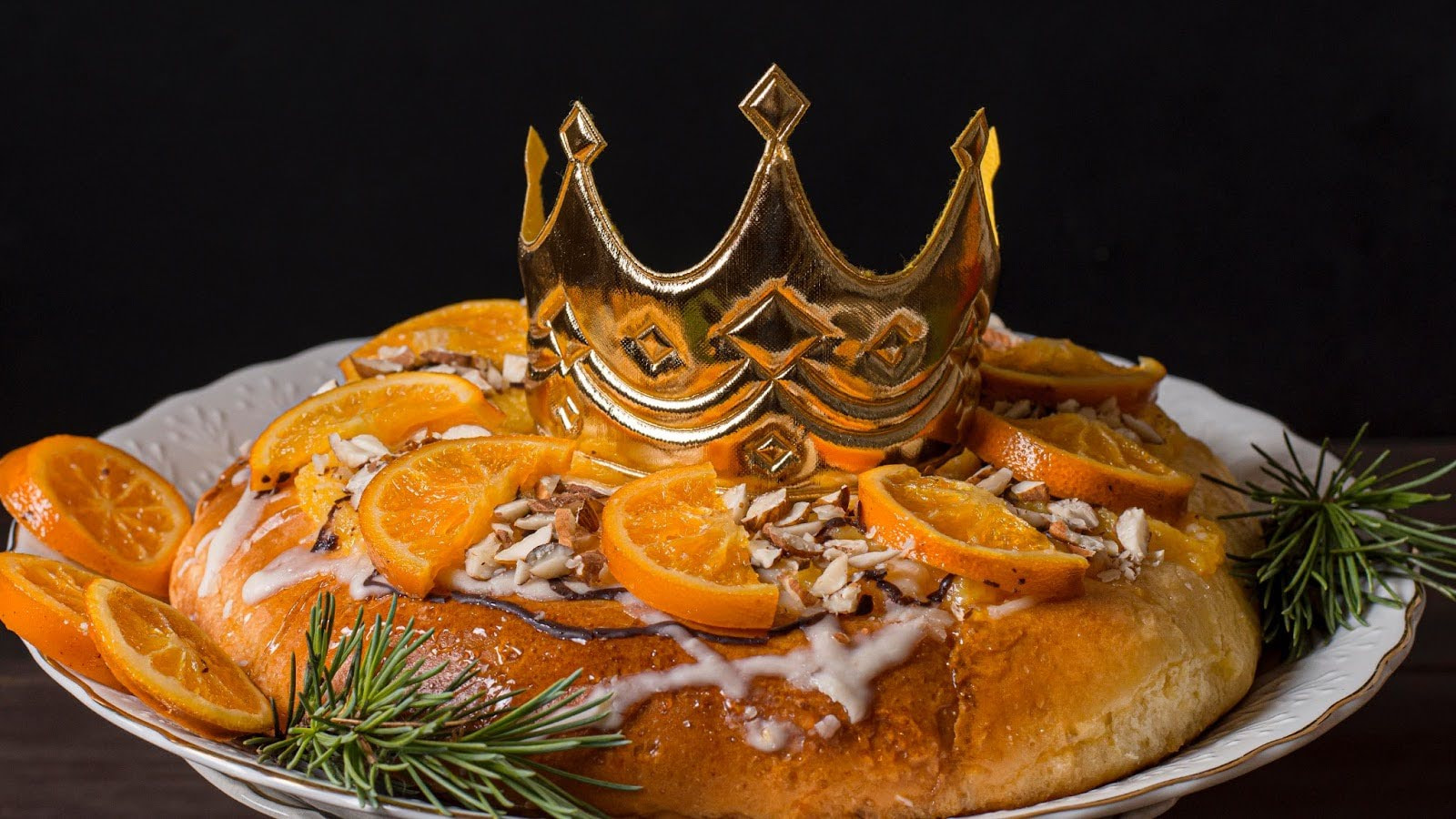
While the exact form varies by region, most versions share common features: a ring or oval shape symbolizing a crown, decorative toppings representing jewels or royal adornments, and a hidden surprise inside. The cake serves as both a religious commemoration and a community celebration, bringing families together to share good fortune.
Some regional variations include:
- Rosca de Reyes (Spain, Mexico, Latin America): A sweet yeast bread decorated with candied fruits and sugar, often filled with cream or chocolate
- Galette des Rois (France): Puff pastry filled with frangipane (almond cream), typically flat rather than ring-shaped
- Bolo Rei (Portugal): A dense, fruit-studded cake with nuts and candied fruit
- King Cake (United States, especially New Orleans): Associated with Mardi Gras, featuring purple, green, and gold icing
History and Origins of the 3 Kings Cake
The tradition of the 3 Kings Cake is rooted in three pivotal moments in Christian theology: the visit of the Magi, Jesus' baptism, and his first miracle. Over time, the focus on the Three Wise Men became predominant in Western Christianity.
Start Your Culinary Journey
Learn the art of cooking in a world-class environment


The practice of baking special cakes for Epiphany likely evolved from the Roman Saturnalia festivals, where a bean was hidden in a cake, and whoever found it became the "king" of the festivities. Early Christians adapted this custom, infusing it with religious meaning tied to the Magi's journey to honor the newborn Christ.
By the Middle Ages, the tradition had spread throughout Europe. French bakers created elaborate galettes for the nobility, while Spanish and Portuguese versions incorporated exotic ingredients such as citrus peel and spices. They were luxuries that evoked the precious gifts the Magi brought. The ring shape emerged as a deliberate symbol of both eternity and the crowns worn by the Three Kings.
Symbolism of the 3 Kings Cake
Every element of the 3 Kings Cake carries symbolic weight, transforming a simple pastry into a meaningful ritual that connects faith, family, and fortune.


The ring shape represents multiple layers of meaning. Most immediately, it evokes the crowns worn by the Three Wise Men, marking them as royalty who humbled themselves before an infant. The circular form also symbolizes eternity, the endless cycle of seasons, and the continuity of faith and tradition passing from generation to generation. Some interpretations link the circle to the Magi's long journey—a path with no true beginning or end.
The decorative elements used aren't purely aesthetic either. The candied fruits adorning Spanish and Latin American versions represent the jewels and precious stones that would have adorned royal crowns. Colors carry significance, too: in New Orleans King Cakes, purple represents justice, green symbolizes faith, and gold stands for power. French galettes, if purchased, include a paper crown to crown the "king" or "queen" who finds the figurine hidden inside the cake.
The hidden figurine creates the cake's most distinctive tradition. Finding the bean or figurine brings both blessing and obligation. Depending on the culture, the finder is believed to receive good luck for the coming year and must either pay for the cake or provide one the following year. If a crown is included the finder of the figurine is also crowned king or queen of the day–a tradition very popular among families.
Even the act of sharing the cake itself carries meaning. Cutting and distributing slices represents generosity, hospitality, and the idea that blessings should be shared among family and community. In some traditions, an extra slice is set aside for a stranger or the poor, embodying Christian charity.
How to Make a 3 Kings Cake
Baking a 3 Kings Cake at home is a way of continuing a ritual that spans continents and centuries. Whether you grew up calling it rosca de reyes, galette des rois, or bolo rei, the joy of preparing this festive bread lies in the symbolism, surprise, and shared anticipation it brings to the table. And despite its regal name, this is a cake you absolutely can master in your own kitchen.
Main ingredients
The beauty of this recipe lies in its simplicity, with ingredients you'll find in most well-stocked kitchens:


For the dough
- 500g all-purpose flour
- 10g active dry yeast
- 100g granulated sugar
- 3 large eggs
- 100g unsalted butter, softened
- 150ml warm whole milk
- Zest of 1 orange
- 1 teaspoon vanilla extract
- Pinch of salt
For flavor and filling (optional)
- 1 tbsp orange blossom water or rum
- A pinch of ground anise or cinnamon
- Almond paste or cream cheese for filling
For cake decorating:
- Candied fruit (orange peel, cherries, figs)
- Pearl or coarse sugar
- Sliced almonds
- 1 egg + 1 tbsp milk for egg wash
For the hidden surprise
- 1 small porcelain figurine or a foil-wrapped bean
Step 1 – Prepare the dough
Creating a tender, flavorful dough requires patience but isn't technically difficult. The key is giving the yeast time to work its magic.
Start by activating the yeast: mix the warm milk with one tablespoon of sugar, then sprinkle the yeast on top. Let it sit for 5–10 minutes until it foams, so you know that your yeast is alive and ready.
In a large mixing bowl, whisk together flour, remaining sugar, and salt. Create a well in the center and add the yeast mixture, eggs, softened butter, orange zest, and vanilla. Mix with a wooden spoon until a shaggy dough forms, then turn out onto a lightly floured surface.
Knead the dough for 10–15 minutes until smooth, elastic, and slightly tacky but not sticky. You can also use a stand mixer with a dough hook attachment for about 8 minutes on medium speed. The dough should pass the "windowpane test". So, stretch a small piece between your fingers; if it forms a thin, translucent membrane without tearing, gluten development is sufficient.


Place the dough in a lightly greased bowl, cover with a damp tea towel or plastic wrap, and let it rise in a warm, draft-free spot for 1–2 hours until doubled in size. Depending on the room temperature, this might take longer. Be patient, as it's better not to rush the dough.
Step 2 – Shape the cake
Once your dough has doubled, gently punch it down to release excess gas. Turn it out onto a lightly floured surface and shape it into a smooth ball, then let it rest for 10 minutes to relax the gluten.
Roll or stretch the dough into a long rope about 60–70cm (24–28 inches) long and roughly 5cm (2 inches) thick. Aim for even thickness throughout so the cake bakes uniformly.
Form the rope into a ring, overlapping the ends by about 5cm and pinching them together firmly to seal. You want a sturdy join that won't separate during baking. Place the ring on a parchment-lined baking sheet, ensuring there's space in the center—it will expand during proofing and baking.
Now comes the fun part: hiding the figurine. Carefully insert it into the bottom of the dough ring, pushing it in from underneath so it's completely concealed. Choose a spot you can remember (or mark discreetly) so you know roughly where it is when slicing. Make sure the figurine is food-safe and heat-resistant.
Cover the shaped dough loosely with plastic wrap or a tea towel and let it proof for 45–60 minutes until puffy and increased in size by about 50%. It won't double like the first rise, but should look noticeably lighter and airier.
Step 3 – Add toppings before baking
While the dough proofs, preheat your oven to 180°C (350°F) and prepare your decorations.
Once the dough has finished its second rise, brush the entire surface gently with egg wash. This creates the golden, glossy finish characteristic of traditional rosca. Be thorough but gentle. You don't want to deflate the dough.


Press candied fruit pieces decoratively into the top of the ring, spacing them evenly to create a jewel-studded crown effect. Traditional arrangements use alternating colors, like red cherries, orange peel, and green figs. You can also add sliced almonds between fruit pieces for texture contrast.
Sprinkle pearl sugar or coarse decorating sugar over the entire surface for sparkle. Feel free to get creative.
Step 4 – Bake
Slide the cake into your preheated oven and bake for 25–35 minutes. The exact time depends on your oven and the thickness of your dough ring. You're looking for a deep golden-brown color on top and a hollow sound when you tap the bottom.
Internal temperature should reach about 90°C (190°F) when fully baked. If the top browns too quickly before the interior is done, tent it loosely with aluminum foil for the last 10 minutes.
Remove from the oven and let cool on the baking sheet for 10 minutes, then transfer to a wire rack. The cake should feel light for its size and have a slight spring when pressed gently.
Step 5 – Finishing touches
Some traditions stop at baking, while others add post-bake embellishments. If you want extra shine, brush the warm cake with a simple sugar syrup (equal parts sugar and water, heated until sugar dissolves). This creates a glossy, slightly sticky surface that catches light beautifully.
For a more rustic look, dust the cooled cake lightly with powdered sugar just before serving.
You can also add a few fresh candied fruit pieces or edible flowers for a contemporary touch.
Let the cake cool completely before serving. The flavors deepen and the texture improves if made a day ahead and stored in an airtight container.
Step 6 – Serving the cake
The ritual of serving is as important as the baking. Traditionally, the youngest child in the family crawls under the table to direct which slice goes to whom, ensuring fairness and adding an element of playful anticipation.


Slice the cake into portions, cutting through carefully (warn guests about the hidden figurine to avoid broken teeth!). The person who receives the slice with the figurine shouts that they have found it and then wears a paper crown so they are symbolically king or queen for the day.
Why the 3 Kings Cake Endures
Centuries after its origins, the 3 Kings Cake remains a beloved tradition because it offers something increasingly rare: a ritual that combines faith, family, and food in equal measure. In an era when many holiday customs feel commercialized or disconnected from their roots, this cake maintains authentic cultural significance while remaining accessible and joyful.
At Culinary Arts Academy Switzerland, we treat traditions like these as more than historical footnotes. They're starting points for learning. In the Swiss Diploma in Pastry Arts and across our culinary programs, students gain the technical skill to execute time-honored recipes and the creative freedom to reimagine them.
We teach how to respect the past without being limited by it; how to bake with precision, experiment with purpose, and create pastries that reflect both heritage and bold, personal vision.
Frequently Asked Questions
How long does 3 Kings Cake stay fresh?
A properly stored 3 Kings Cake remains fresh for 2–3 days at room temperature in an airtight container, or up to 5 days refrigerated, though the texture is best within the first day or two.
What can I use instead of a figurine inside the cake?
A large dried fava bean wrapped in aluminum foil is traditional, or use a whole blanched almond, a coin (wrapped in foil), or simply omit the hidden object and assign the "king" role through another method, like drawing names.
Interested in becoming a world-class chef? Learn more about Culinary Arts Academy Switzerland. Download our brochure.